Moz Q&A is closed.
After more than 13 years, and tens of thousands of questions, Moz Q&A closed on 12th December 2024. Whilst we’re not completely removing the content - many posts will still be possible to view - we have locked both new posts and new replies. More details here.
How to stop Google crawling after 301 redirect?
-
I have removed all pages from my old website and set 301 redirect to new website. But, I have verified old website with Google webmaster tools' HTML verification file which enable me to track all data and existence of pages in Google search for my old website. I was assumed that, Google will stop crawling and DE-indexed all pages after 301 redirect. Because, I have set 301 redirect before 3 months.
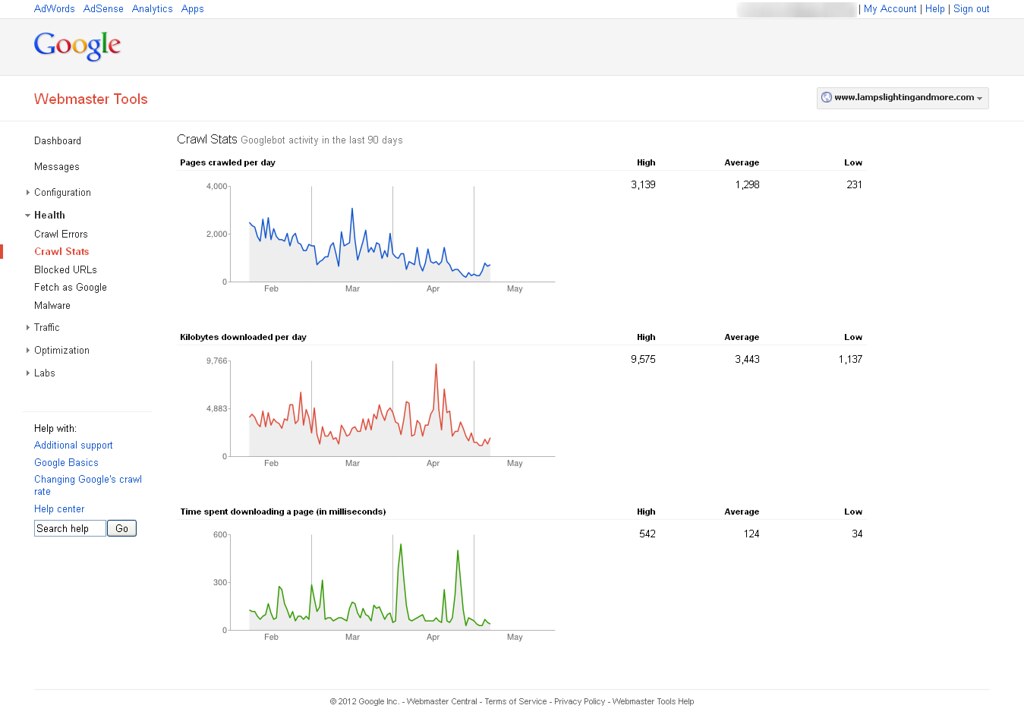
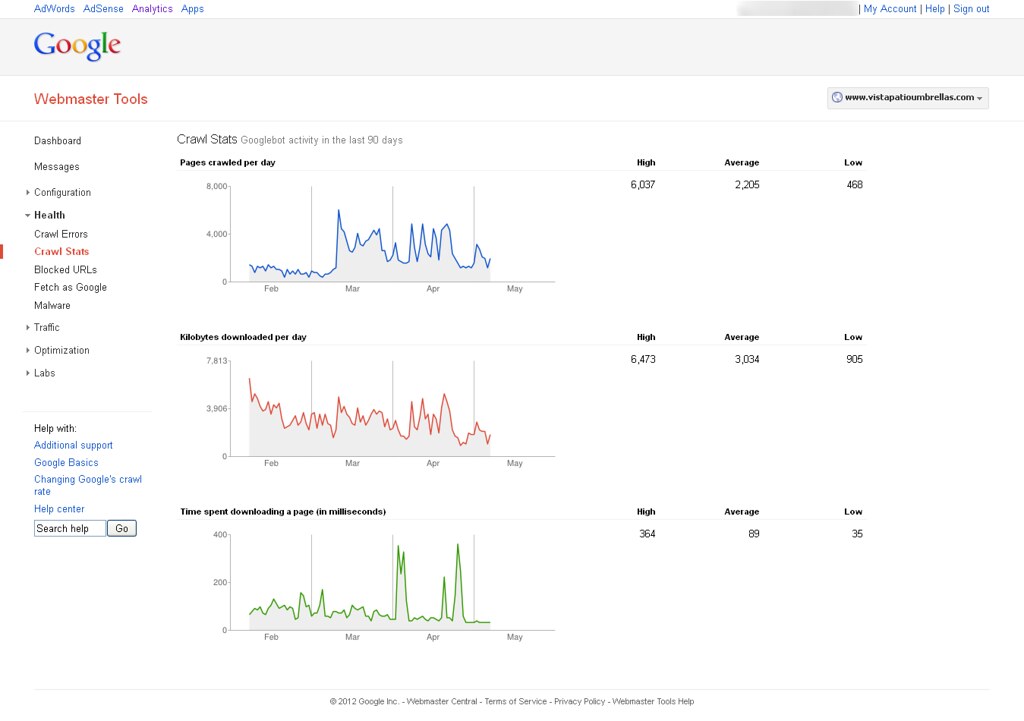
Now, I'm able to see Google bot activity on my website with help of Google webmaster tools. You can find out attachment to know more about it. How can it possible & How Google can crawl removed pages?
You can see following image to know more about it.
&
-
Google is most likely following links on other sites pointing to your old site and then 301'ing to the new site so you're seeing activity in WMT
looking here is still see two pages in the index:
you can go in and remove the site in WMT using the remove URL tool and see if that stops activity in that old WMT account. Crawling or not crawling, reporting or not reporting, there is not an issue here though - the 301's appear to be properly set up.


Got a burning SEO question?
Subscribe to Moz Pro to gain full access to Q&A, answer questions, and ask your own.
Browse Questions
Explore more categories
-
Moz Tools
Chat with the community about the Moz tools.
-
SEO Tactics
Discuss the SEO process with fellow marketers
-
Community
Discuss industry events, jobs, and news!
-
Digital Marketing
Chat about tactics outside of SEO
-
Research & Trends
Dive into research and trends in the search industry.
-
Support
Connect on product support and feature requests.
Related Questions
-

Using a Reverse Proxy and 301 redirect to appear Sub Domain as Sub Directory - what are the SEO Risks?
We’re in process to move WordPress blog URLs from subdomains to sub-directory. We aren’t moving blog physically, but using reverse proxy and 301 redirection to do this. Blog subdomain URL is https://blog.example.com/ and destination sub-directory URL is https://www.example.com/blog/ Our main website is e-commerce marketplace which is YMYL site. This is on Windows server. Due to technical reasons, we can’t physically move our WordPress blog to the main website. Following is our Technical Setup Setup a reverse proxy at https://www.example.com/blog/ pointing to https://blog.example.com/ Use a 301 redirection from https://blog.example.com/ to https://www.example.com/blog/ with an exception if a traffic is coming from main WWW domain then it won’t redirect. Thus, we can eliminate infinite loop. Change all absolute URLs to relative URLs on blog Change the sitemap URL from https://blog.example.com/sitemap.xml to https://www.example.com/blog/sitemap.xml and update all URLs mentioned within the sitemap. SEO Risk Evaluation We have individual GA Tracking ID and individual Google Search Console Properties for main website and blog. We will not merge them. Keep them separate as they are. Keeping this in mind, I am evaluating SEO Risks factors Right now when we receive traffic from main website to blog (or vice versa) then it is considered as referral traffic and new cookies are set for Google Analytics. What’s going to happen when its on the same domain? Which type of settings change should I do in Blog’s Google Search Console? (A). Do I need to request “Change of Address” in the Blog’s search console property? (B). Should I re-submit the sitemap? Do I need to re-submit the blog sitemap from the https://www.example.com/ Google Search Console Property? Main website is e-commerce marketplace which is YMYL website, and blog is all about content. So does that impact SEO? Will this dilute SEO link juice or impact on the main website ranking because following are the key SEO Metrices. (A). Main website’s Avg Session Duration is about 10 minutes and bounce rate is around 30% (B). Blog’s Avg Session Duration is 33 seconds and bounce rate is over 92%
Intermediate & Advanced SEO | | joshibhargav_200 -

Google Adsbot crawling order confirmation pages?
Hi, We have had roughly 1000+ requests per 24 hours from Google-adsbot to our confirmation pages. This generates an error as the confirmation page cannot be viewed after closing or by anyone who didn't complete the order. How is google-adsbot finding pages to crawl that are not linked to anywhere on the site, in the sitemap or linked to anywhere else? Is there any harm in a google crawler receiving a higher percentage of errors - even though the pages are not supposed to be requested. Is there anything we can do to prevent the errors for the benefit of our network team and what are the possible risks of any measures we can take? This bot seems to be for evaluating the quality of landing pages used in for Adwords so why is it trying to access confirmation pages when they have not been set for any of our adverts? We included "Disallow: /confirmation" in the robots.txt but it has continued to request these pages, generating a 403 page and an error in the log files so it seems Adsbot doesn't follow robots.txt. Thanks in advance for any help, Sam
Intermediate & Advanced SEO | | seoeuroflorist0 -

Changing URL structure of date-structured blog with 301 redirects
Howdy Moz, We've recently bought a new domain and we're looking to change over to it. We're also wanting to change our permalink structure. Right now, it's a WordPress site that uses the post date in the URL. As an example: http://blog.mydomain.com/2015/01/09/my-blog-post/ We'd like to use mod_rewrite to change this using regular expressions, to: http://newdomain.com/blog/my-blog-post/ Would this be an appropriate solution? RedirectMatch 301 /./././(.) /blog/$1
Intermediate & Advanced SEO | | IanOBrien0 -

Proper 301 in Place but Old Site Still Indexed In Google
So i have stumbled across an interesting issue with a new SEO client. They just recently launched a new website and implemented a proper 301 redirect strategy at the page level for the new website domain. What is interesting is that the new website is now indexed in Google BUT the old website domain is also still indexed in Google? I even checked the Google Cached date and it shows the new website with a cache date of today. The redirect strategy has been in place for about 30 days. Any thoughts or suggestions on how to get the old domain un-indexed in Google and get all authority passed to the new website?
Intermediate & Advanced SEO | | kchandler0 -

301 Redirect of subdomain?
Fellow Mozzers, I'm having a hard time wrapping my brain around a redirect issue and thought it was worth posing the question to the Moz community. I did a search first but couldn't find the exact answer I was looking for. How does a 301 redirect work when you redirect a sub domain example.homepage.com to www.homepage.com but you keep the sub directories of example.homepage.com/page-1 active and are trying to rank them? I'm dealing with a current project where this is happening and this doesn't make sense to me, to redirect the subdomain if you're also trying to rank/create search traffic for pages, sub directories on example.homepage.com. This also get's into the debate of if a sub domain site is viewed as it's own website and therefore has to rank itself. If this is true, it seems like we're kind of killing the authority of the site by redirecting it. Additionally, www.homepage.com has a much stronger link profile than example.homepage.com I hope this makes sense. Any thoughts are appreciated. Thanks for your time.
Intermediate & Advanced SEO | | SMG-Texas0 -

Multiple 301 Redirects for the Same Page
Hi Mozzers, What happens if I have a trail of 301 redirects for the same page? For example,
Intermediate & Advanced SEO | | Travis-W
SiteA.com/10 --> SiteA.com/11 --> SiteA.com/13 --> SiteA.com/14 I know I lose a little bit of link juice by 301 redirecting.
The question is, would the link juice look like this for the example above? 100% --> 90% --> 81% -->72.9%
Or just 100% -----------------------------------------> 90% Does this link juice refer to juice from inbound links or links between internal pages on my site? Thanks!0 -

How To 301 Redirect .html pages
I need to redirect a page/URL that is purely .html to a new location. I don't know how to do this. All the redirects I can find are for server side code pages .php/.aspx etc. From my understanding I can't put a server side redirect in a .html file. I am hosting on a microsoft server, however the new page I am redirecting to is .php. I am running some WordPress (.php) files on the server. I need to make it redirect before the old page loads so visitors don't start reading something that is about to get redirected Can someone please help me?
Intermediate & Advanced SEO | | MyNet0 -

How to prevent Google from crawling our product filter?
Hi All, We have a crawler problem on one of our sites www.sneakerskoopjeonline.nl. On this site, visitors can specify criteria to filter available products. These filters are passed as http/get arguments. The number of possible filter urls is virtually limitless. In order to prevent duplicate content, or an insane amount of pages in the search indices, our software automatically adds noindex, nofollow and noarchive directives to these filter result pages. However, we’re unable to explain to crawlers (Google in particular) to ignore these urls. We’ve already changed the on page filter html to javascript, hoping this would cause the crawler to ignore it. However, it seems that Googlebot executes the javascript and crawls the generated urls anyway. What can we do to prevent Google from crawling all the filter options? Thanks in advance for the help. Kind regards, Gerwin
Intermediate & Advanced SEO | | footsteps0