Moz Q&A is closed.
After more than 13 years, and tens of thousands of questions, Moz Q&A closed on 12th December 2024. Whilst we’re not completely removing the content - many posts will still be possible to view - we have locked both new posts and new replies. More details here.
How to stop Google crawling after 301 redirect?
-
I have removed all pages from my old website and set 301 redirect to new website. But, I have verified old website with Google webmaster tools' HTML verification file which enable me to track all data and existence of pages in Google search for my old website. I was assumed that, Google will stop crawling and DE-indexed all pages after 301 redirect. Because, I have set 301 redirect before 3 months.
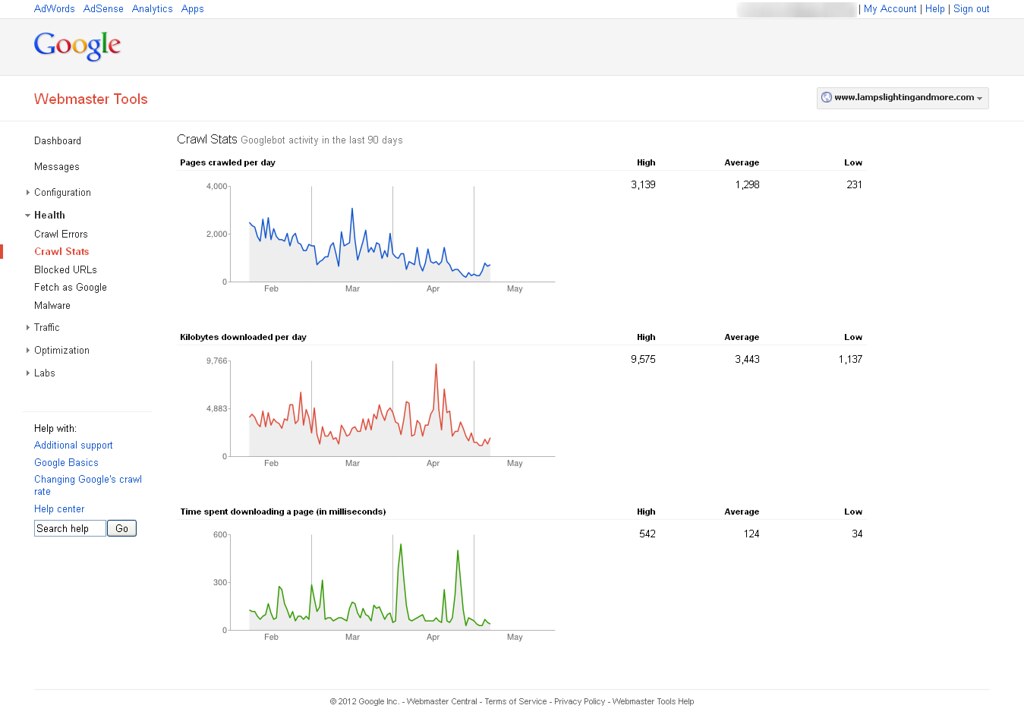
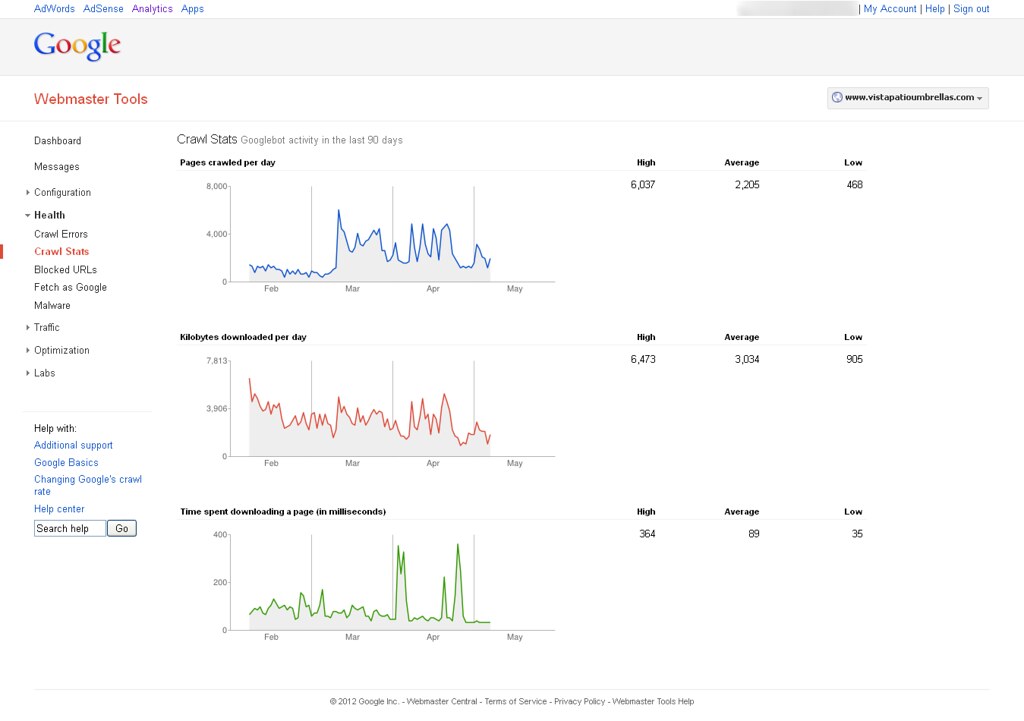
Now, I'm able to see Google bot activity on my website with help of Google webmaster tools. You can find out attachment to know more about it. How can it possible & How Google can crawl removed pages?
You can see following image to know more about it.
&
-
Google is most likely following links on other sites pointing to your old site and then 301'ing to the new site so you're seeing activity in WMT
looking here is still see two pages in the index:
you can go in and remove the site in WMT using the remove URL tool and see if that stops activity in that old WMT account. Crawling or not crawling, reporting or not reporting, there is not an issue here though - the 301's appear to be properly set up.


Got a burning SEO question?
Subscribe to Moz Pro to gain full access to Q&A, answer questions, and ask your own.
Browse Questions
Explore more categories
-
Moz Tools
Chat with the community about the Moz tools.
-
SEO Tactics
Discuss the SEO process with fellow marketers
-
Community
Discuss industry events, jobs, and news!
-
Digital Marketing
Chat about tactics outside of SEO
-
Research & Trends
Dive into research and trends in the search industry.
-
Support
Connect on product support and feature requests.
Related Questions
-

How to handle potentially thousands (50k+) of 301 redirects following a major site replacement
We are looking for the very best way of handling potentially thousands (50k+) of 301 redirects following
Intermediate & Advanced SEO | | GeezerG
a major site replacement and I mean total replacement. Things you should know
Existing domain has 17 years history with Google but rankings have suffered over the past year and yes we know why. (and the bitch is we paid a good sized SEO company for that ineffective and destructive work)
The URL structure of the new site is completely different and SEO friendly URL's rule. This means that there will be many thousands of historical URL's (mainly dynamic ones) that will attract 404 errors as they will not exist anymore. Most are product profile pages and the God Google has indexed them all. There are also many links to them out there.
The new site is fully SEO optimised and is passing all tests so far - however there is a way to go yet. So here are my thoughts on the possible ways of meeting our need,
1: Create 301 redirects for each an every page in the .htaccess file that would be one huge .htaccess file 50,000 lines plus - I am worried about effect on site speed.
2: Create 301 redirects for each and every unused folder, and wildcard the file names, this would be a single redirect for each file in each folder to a single redirect page
so the 404 issue is overcome but the user doesn't open the precise page they are after.
3: Write some code to create a hard copy 301 index.php file for each and every folder that is to be replaced.
4: Write code to create a hard copy 301 .php file for each and every page that is to be replaced.
5: We could just let the pages all die and list them with Google to advise of their death.
6: We could have the redirect managed by a database rather than .htaccess or single redirect files. Probably the most challenging thing will be to load the data in the first place, but I assume this could be done programatically - especially if the new URL can be inferred from the old. Many be I am missing another, simpler approach - please discuss0 -

Hacked website - Dealing with 301 redirects and a large .htaccess file
One of my client's websites was recently hacked and I've been dealing with the after effects of it. The website is now clean of malware and I already appealed to Google about the malware issue. The current issue I have is dealing with the 20, 000+ crawl errors which are garbage links that were created from the hacking. How does one go about dealing with all the 301 redirects I need to create for all the 404 crawl errors? I'm already noticing an increased load time on the website due to having a rather large .htaccess file with a couple thousand 301 redirects done already which I fear will result in my client's website performance and SEO performance taking a hit as well.
Intermediate & Advanced SEO | | FPK0 -

Switching from HTTP to HTTPS: 301 redirect or keep both & rel canonical?
Hey Mozzers, I'll be moving several sites from HTTP to HTTPS in the coming weeks (same brand, multiple ccTLDs). We'll start on a low traffic site and test it for 2-4 weeks to see the impact before rolling out across all 8 sites. Ideally, I'd like to simply 301 redirect the HTTP version page to the HTTPS version of the page (to get that potential SEO rankings boost). However, I'm concerned about the potential drop in rankings, links and traffic. I'm thinking of alternative ways and so instead of the 301 redirect approach, I would keep both sites live and accessible, and then add rel canonical on the HTTPS pages to point towards HTTP so that Google keeps the current pages/ links/ indexed as they are today (in this case, HTTPS is more UX than for SEO). Has anyone tried the rel canonical approach, and if so, what were the results? Do you recommend it? Also, for those who have implemented HTTPS, how long did it take for Google to index those pages over the older HTTP pages?
Intermediate & Advanced SEO | | Steven_Macdonald0 -

Does Google Index URLs that are always 302 redirected
Hello community Due to the architecture of our site, we have a bunch of URLs that are 302 redirected to the same URL plus a query string appended to it. For example: www.example.com/hello.html is 302 redirected to www.example.com/hello.html?___store=abc The www.example.com/hello.html?___store=abc page also has a link canonical tag to www.example.com/hello.html In the above example, can www.example.com/hello.html every be Indexed, by google as I assume the googlebot will always be redirected to www.example.com/hello.html?___store=abc and will never see www.example.com/hello.html ? Thanks in advance for the help!
Intermediate & Advanced SEO | | EcommRulz0 -

Setting up 301 Redirects after acquisition?
Hello! The company that I work for has recently acquired two other companies. I was wondering what the best strategy would be as it relates to redirects / authority. Please help! Thanks
Intermediate & Advanced SEO | | Colin.Accela0 -

Language Detection redirect: 301 or 302?
We have a site offering a voip app in 4 languages. Users are currently 302 redirected from the root page to /language subpages, depending on their browser language. Discussions about the sense of this aside: Is it correct to use a 302 redirect here or should users be 301 redirected to their respective languages? I don't find any guideline on this whatsoever...
Intermediate & Advanced SEO | | zeepartner1 -

301 or 302 Redirects to Mobile Site
When it's detected that a mobile device is accessing the site it has the ability to redirect from www.example.com to m.example.com. Does it make more sense to employ a 301 or 302 redirect here? Google says a 301 but does not explain why (although usually I stick to "when in doubt, 301") . It seems like a 302 would prevent passing link juice to the mobile site and having mobile-optimized results also showing up in Google's index. What is the preference here?
Intermediate & Advanced SEO | | SEOTGT0 -

How do I go about changing a 302 redirect to a 301.
Hello Friends! Thanks for viewing my question. Ok,My question today is How do I go about redirecting a 302 link to a 301 link. I understand the benefits of doing this as far as link juice and how the Search Engines views the two Re-Directs. I am wanting to know where I would start to do this. Thank you in advance for any help or suggestions!
Intermediate & Advanced SEO | | FrontlineMobility0